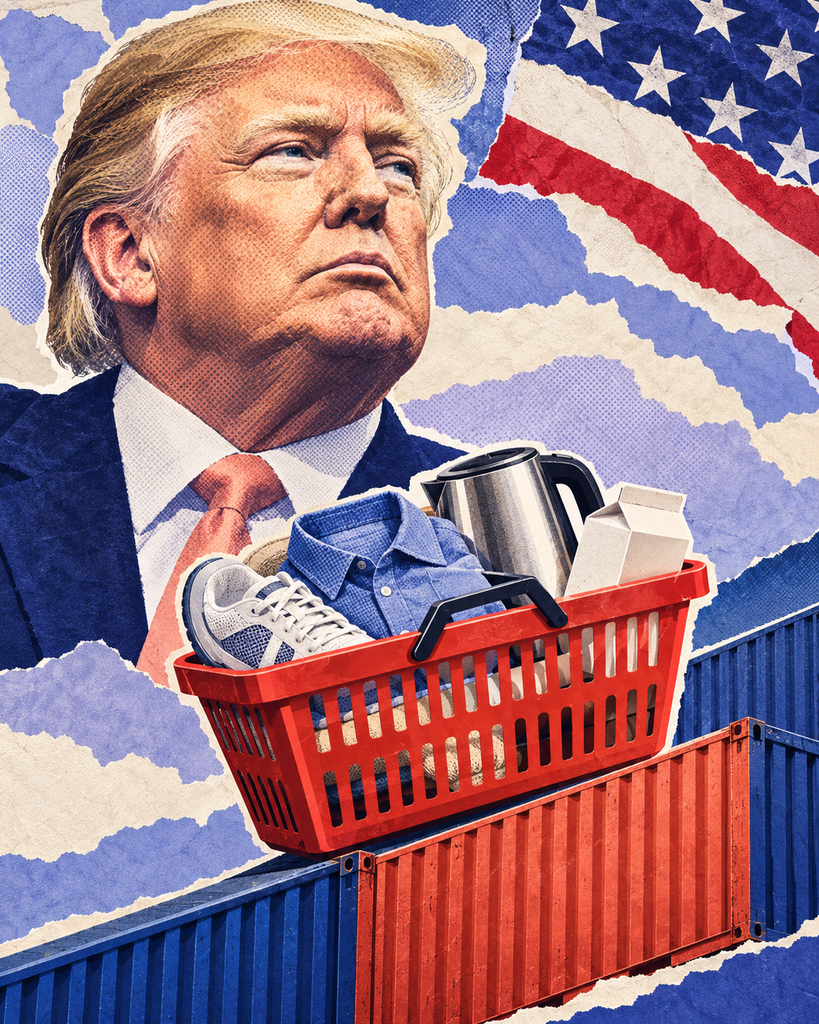
President Donald Trump’s tariffs pushed up prices for American-made products as well as imports, adding an estimated 2.9 percentage points to annual consumer goods inflation by February 2026, according to research published by the Federal Reserve Bank of New York.
Without those tariff effects, prices across the goods examined would have declined slightly, the researchers estimated. Their analysis covered 67 categories of non-oil consumer goods, excluding services. The finding therefore does not mean tariffs added 2.9 percentage points to the overall U.S. inflation rate.
The research helps explain why choosing a domestically manufactured product does not necessarily protect shoppers from tariff-related costs. American factories often use imported components and materials. When those supplies become more expensive, manufacturers can pass the additional expense along through their own prices.
There is another effect: when imported competitors become more expensive, domestic producers have more room to raise prices. Researchers identified both mechanisms, with higher production costs playing the larger role.
Overall, roughly two-thirds of the estimated consumer price effect came directly from imported goods. About one-third came through products manufactured in the United States.
The timing also matters for household budgets. Import costs respond quickly to new tariffs, but the effects on domestic production move more slowly through supply chains. The researchers found that the full consumer price impact can take about a year to appear. This means shoppers may encounter delayed increases after a tariff first takes effect.
Separate Federal Reserve research published in April also found substantial tariff effects. Using a different approach, it estimated that tariffs implemented through November 2025 raised core goods prices, measured by the personal consumption expenditures index, by 3.1 percent through February 2026. That estimate uses a different measure and should not be treated as identical to the New York Fed finding.
The October 6 New York Fed analysis draws an important distinction between slowing inflation and falling prices. Its projections show the tariff contribution to annual goods inflation fading while price levels remain above where they otherwise would have been.
Those projections depend on assumptions about future tariff policy. The analysis also holds broader economic conditions fixed, meaning it does not capture every possible effect through wages, demand, exchange rates or monetary policy. Whether households receive further relief depends partly on how those conditions and trade policies develop.